Sleep
Mouth taping for sleep: does it work, and is it safe?
By Kim Ingwersen · 6 October 2026
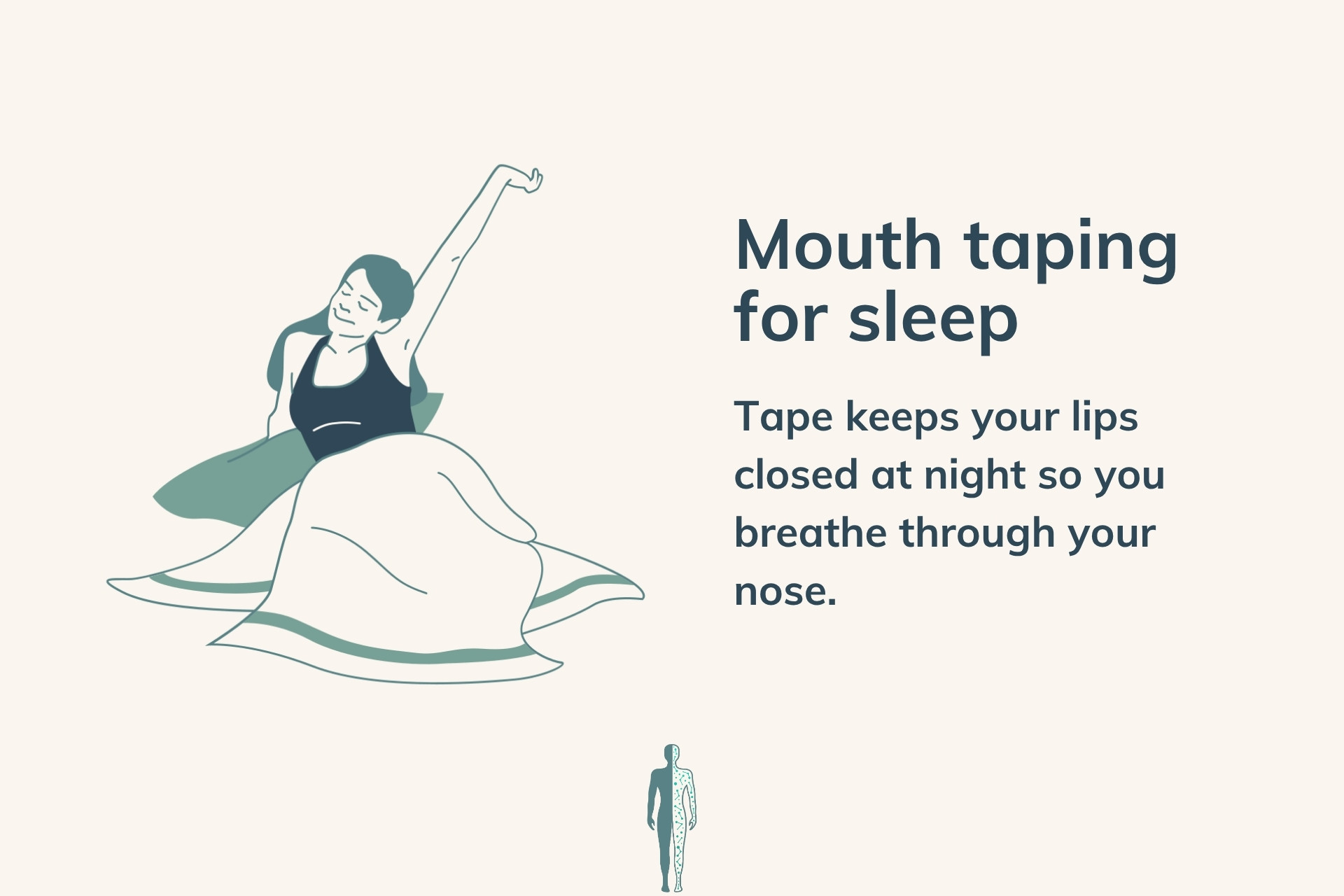
Mouth taping is a simple idea that spread fast on social media: put a strip of tape over your lips before you fall asleep, so you breathe through your nose all night. Fans say it stops snoring, prevents a dry mouth and gives deeper sleep. The research is smaller and more mixed than the hype.
Why breathe through your nose at night?
The nose is built for breathing. It warms, filters and humidifies the air before it reaches your lungs. When you breathe through your mouth at night, the airway behind the tongue tends to narrow, which makes snoring and pauses in breathing more likely. Mouth breathing also dries out the mouth, so many people wake up thirsty or with a sore throat.
Tape is one way to keep the lips together. Other options are chin straps, or treating the reason you breathe through your mouth in the first place, such as a blocked nose.
What the research says
There are only a handful of studies, and most are small.
- A 2025 systematic review found ten studies with 213 participants in total (Rhee et al., 2025). Two of them showed a clear improvement in sleep apnea markers. The rest found no difference. The authors also warned about the risk of suffocation in people whose nose is blocked, and concluded that people taping their mouth without checking with a doctor first may be taking a real risk.
- In mouth breathers with mild sleep apnea, a study of 20 people found that one week of taping cut the number of breathing pauses per hour from 8.3 to 4.7, and snoring by 47 % (Lee et al., 2022). 13 of the 20 responded well.
- A porous mouth patch reduced snoring and daytime sleepiness in 30 people with mild sleep apnea who breathed through the mouth (Huang and Young, 2015).
So: mouth taping can reduce snoring in people who snore because they breathe through their mouth. There is no good evidence that it improves sleep in people who already breathe well, and the studies are too small to say much about long-term effects.
The risks
The main risk is simple. If you cannot breathe freely through your nose and your mouth is taped shut, you can’t get enough air. That can happen with a cold, hay fever, nasal polyps or a deviated septum.
The second risk is hiding a bigger problem. Loud snoring, gasping at night and heavy tiredness during the day are classic signs of obstructive sleep apnea. Taping your mouth may reduce the snoring without treating the apnea itself. Sleep apnea is linked to high blood pressure and heart disease, and it needs a proper diagnosis.
Some people also get skin irritation from the tape, or feel anxious with their mouth closed.
How to try it safely
If you are healthy, breathe easily through your nose and want to test it:
- Test your nose first. Close your mouth and breathe only through the nose for five minutes while awake. If that feels hard, don’t tape.
- Use the right tape. Skin-friendly tape made for mouth taping, or medical paper or silicone tape. A small vertical strip in the middle of the lips is enough, so you can still open your mouth if you need to.
- Practise during the day. Wear it for 15–20 minutes while reading, to get used to it.
- Skip it on bad nights. Not when you have a cold, after alcohol, or after taking sleeping pills.
- Stop if you feel anxious or wake up gasping. And see a doctor if you snore loudly or are tired during the day despite enough sleep.
Bottom line
Mouth taping is cheap and easy, and for mouth breathers with mild snoring it can help. It is not a treatment for sleep apnea, and it is not for anyone with a blocked nose. If you snore loudly, get checked first. If you just want to breathe through your nose at night, start with a small strip of skin-friendly tape and see how you feel.
Sources
- Rhee et al. (2025): Breaking social media fads and uncovering the safety and efficacy of mouth taping in patients with mouth breathing, sleep disordered breathing, or obstructive sleep apnea: a systematic review, PLOS ONE
- Lee et al. (2022): The impact of mouth-taping in mouth-breathers with mild obstructive sleep apnea: a preliminary study, Healthcare
- Huang and Young (2015): Novel porous oral patches for patients with mild obstructive sleep apnea and mouth breathing: a pilot study, Otolaryngology–Head and Neck Surgery
Frequently asked questions
Is mouth taping safe?
It is low risk for healthy people who breathe freely through the nose. It is not safe if your nose is blocked, for example from a cold, allergies or a deviated septum. A 2025 review warned of a risk of suffocation in people with nasal obstruction.
Does mouth taping stop snoring?
It can reduce snoring in people who snore because they breathe through the mouth. In a study of 20 mouth breathers with mild sleep apnea, snoring dropped by almost half after a week of taping. It does not help snoring that comes from the nose or throat.
What tape should I use?
Use gentle, skin-friendly tape made for the purpose, or medical paper or silicone tape. A small vertical strip in the middle of the lips is enough. Never use duct tape or anything that seals the whole mouth.
Who should not try mouth taping?
Children, people with a blocked nose, people who have drunk alcohol or taken sleeping pills, and anyone with signs of sleep apnea such as loud snoring, gasping at night or heavy daytime tiredness. They should see a doctor instead.