Nutrition
Insulin resistance: symptoms, test and what helps
By Kim Ingwersen · Published 19 November 2026
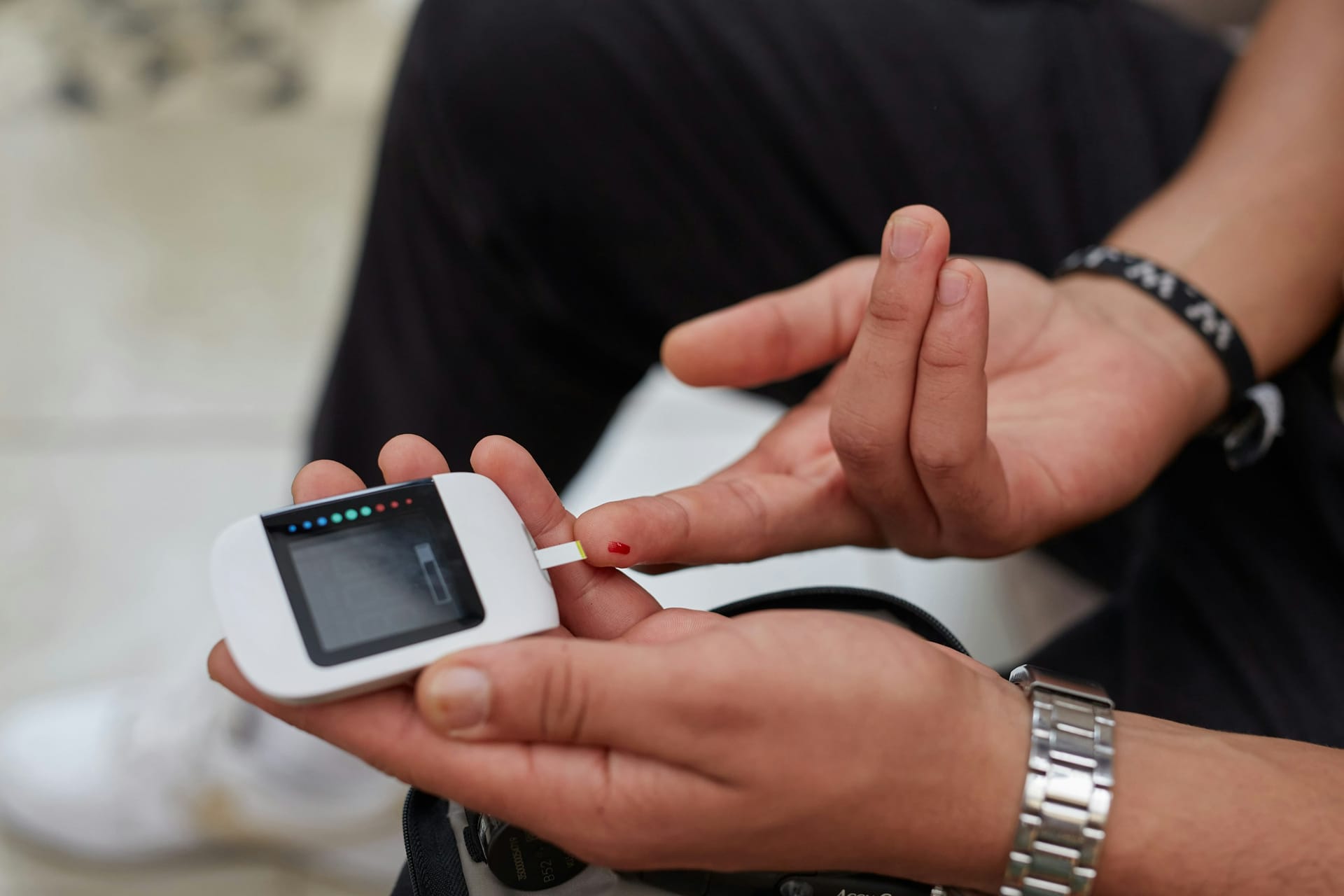
Insulin resistance means your body responds less to insulin, the hormone that moves sugar from your blood into your cells. It rarely causes symptoms, but it is where most cases of type 2 diabetes begin. Here is what happens in the body, the signs to look for, the blood test UK doctors use, and what actually works.
What is insulin resistance?
Insulin is made in the pancreas. After a meal, it makes your muscles, liver and fat tissue take up sugar from the blood. With insulin resistance, these tissues respond more weakly to a normal amount of insulin. The NHS describes type 2 diabetes as a condition where your body cannot make enough insulin, “or the insulin it makes does not work properly (insulin resistance)” (NHS).
The pancreas responds by making more insulin. That keeps blood sugar normal, often for many years. When the pancreas can no longer keep up, blood sugar rises and type 2 diabetes develops.
Insulin sensitivity varies from day to day. A single short night of sleep is enough to lower it for a while, as a study further down shows. The problem is when it lasts.
Symptoms and signs of insulin resistance
You rarely feel insulin resistance itself. These signs suggest you may have it:
- A large waist. The NHS advises keeping your waist to less than half your height. You can check yours with our waist-to-height ratio calculator.
- Dark, velvety skin on the neck, in the armpits or in the groin (acanthosis nigricans), and small skin tags. Both are linked to insulin resistance (Barbato et al., 2012). The NHS lists obesity and type 2 diabetes among the causes of acanthosis nigricans.
- High blood pressure, which the NHS lists as a condition that raises the risk of type 2 diabetes.
- A blood sugar that is slightly higher than normal, without being diabetes.
Tiredness, sugar cravings and hunger after meals are often mentioned. They have so many other causes that they tell you little. The most common symptoms of type 2 diabetes, according to the NHS, are feeling very tired, peeing more than usual, feeling thirsty all the time and losing weight without trying. If you have them, see your GP. Not everyone gets symptoms, so a check is worth having if you are at higher risk.
What causes insulin resistance?
The NHS says you may be more at risk of type 2 diabetes if you are white and over 40, or over 25 and from a South Asian, Chinese, Black African or Black Caribbean background, if a parent, brother or sister has it, if you are overweight and not very active, or if you have a condition such as high blood pressure. These raise your risk:
- Excess weight, especially around the waist.
- Little physical activity.
- Type 2 diabetes in a parent, brother or sister, or having had gestational diabetes yourself, which Diabetes UK says gives a high risk of type 2 diabetes.
- Too little sleep. Nine healthy adults slept for four hours for one night. The next day, they needed about 25% less glucose infused to keep their blood sugar steady during an insulin test, a sign that their bodies were taking up sugar less well (Donga et al., 2010).
- Long-term stress. The stress hormone cortisol raises blood sugar and makes the body less sensitive to insulin. Read more in our guide on how to lower cortisol.
Insulin resistance test: which blood test is used?
There is no simple blood test for insulin resistance in routine care. Your GP looks at the risk factors above and measures your blood sugar, usually with HbA1c. HbA1c shows your average blood sugar over the last two to three months and can be taken at any time of day. These are the UK levels, according to Diabetes UK:
| HbA1c | What it means |
|---|---|
| Below 42 mmol/mol (below 6.0%) | Normal |
| 42–47 mmol/mol (6.0–6.4%) | Prediabetes: high risk of type 2 diabetes |
| 48 mmol/mol (6.5%) or above | Type 2 diabetes |
Fasting insulin, C-peptide and HOMA-IR, which is calculated from fasting insulin and glucose, are mainly used in research. There is no agreed cut-off for when they are too high. If you have several of the risk factors, an HbA1c test at your GP is the best place to start. Diabetes UK’s free Know Your Risk tool asks a few questions, including your waist size, and tells you whether your risk is low, medium, high or very high. If you are 40 to 74 and have no existing health condition, you can also ask your GP surgery or local pharmacy for a free NHS Health Check.
Insulin resistance or prediabetes?
Insulin resistance can last for many years. As long as the pancreas makes enough insulin, blood sugar stays normal. Type 2 diabetes comes when insulin production can no longer keep up and blood sugar rises above the limits in the table. In between is prediabetes, sometimes called borderline diabetes: a blood sugar that is higher than normal but below the diabetes limit.
Prediabetes usually has no symptoms, and Diabetes UK estimates that it affects around one in 12 people. If you have it, your GP should refer you to a type 2 diabetes prevention course or give you advice.
How to reverse insulin resistance
Insulin sensitivity can improve, and two large trials show that this prevents diabetes.
Lose some weight if you are overweight
In the US Diabetes Prevention Program, 3,234 adults with raised blood sugar were split into three groups. The lifestyle group aimed to lose at least 7% of their body weight and be physically active for at least 150 minutes a week. After an average of 2.8 years, they had 58% fewer cases of diabetes than the placebo group. The group given the medicine metformin had 31% fewer (Knowler et al., 2002).
A Finnish trial of 522 overweight adults found the same. Advice on weight loss, less saturated fat, more fibre and more activity cut the risk of diabetes by 58% over four years (Tuomilehto et al., 2001). The participants lost 4.2 kg on average in the first year, so big weight losses aren’t needed.
Exercise, and use your muscles
Your muscles take up a large share of the sugar after a meal. When they work, they take up sugar from the blood in a way that depends less on insulin. Both aerobic exercise and strength training improve insulin sensitivity, and many studies find a larger effect from higher intensity, including intervals (Bird and Hawley, 2017).
Exercise works even without weight loss. If you can’t lose weight, being more active still improves insulin resistance. The NHS advises adults to do at least 150 minutes of moderate activity or 75 minutes of vigorous activity a week, plus strength training on at least two days. If you have been inactive, start gently and build up.
Sleep enough
One night of four hours’ sleep made healthy adults less sensitive to insulin the next day. Regular sleep times, a dark bedroom and enough hours in bed are therefore part of the treatment.
Eat more fibre and wholegrains
If you are overweight and eat a little less while being more active, the exact make-up of your diet probably matters less. Eat plenty of vegetables, fruit, pulses, wholegrains and fish, and little sugar, sugary drinks and processed meat.
Wholegrains are a good place to start. In a new meta-analysis of 87 trials, eating more wholegrains led to slightly lower weight and fasting blood sugar (Naghshi et al., 2026).
What about intermittent fasting?
Intermittent fasting gives about the same weight loss as ordinary calorie restriction. Timing may still play a role. In a small study, men with prediabetes ate all their food within six hours, with dinner before 3 pm. After five weeks, their insulin sensitivity had improved, even though their weight stayed the same (Sutton et al., 2018).
Medicines and supplements
Metformin is a common medicine for type 2 diabetes and must be prescribed by a doctor. In the Diabetes Prevention Program it prevented diabetes, but less than the lifestyle changes. If you want to understand how meals affect your blood sugar, our article on Glucose Revolution covers Jessie Inchauspé’s tips. If you take medicine that lowers blood sugar, talk to your doctor before you try any supplement that claims to do the same.
In short
Insulin resistance means your body has to make more insulin to keep blood sugar normal. It rarely causes symptoms and there is no simple blood test, so an HbA1c test at your GP is the best place to start if you have risk factors. Losing some weight, being more active and sleeping enough work best, and in two large trials lifestyle changes cut the risk of type 2 diabetes by 58%.
Sources
- NHS: What is type 2 diabetes?
- NHS: Symptoms of type 2 diabetes and how it’s diagnosed
- Diabetes UK: Preventing type 2 diabetes
- NHS: Acanthosis nigricans
- NHS: Obesity, diagnosis (waist to height ratio)
- NHS: Physical activity guidelines for adults aged 19 to 64
- Diabetes UK: Prediabetes
- Diabetes UK: What is HbA1c?
- Diabetes UK: Know Your Risk of type 2 diabetes
- Knowler WC et al. (2002): Reduction in the incidence of type 2 diabetes with lifestyle intervention or metformin, New England Journal of Medicine
- Tuomilehto J et al. (2001): Prevention of type 2 diabetes mellitus by changes in lifestyle among subjects with impaired glucose tolerance, New England Journal of Medicine
- Donga E et al. (2010): A single night of partial sleep deprivation induces insulin resistance in multiple metabolic pathways in healthy subjects, Journal of Clinical Endocrinology & Metabolism
- Bird SR and Hawley JA (2017): Update on the effects of physical activity on insulin sensitivity in humans, BMJ Open Sport & Exercise Medicine
- Barbato MT et al. (2012): Association of acanthosis nigricans and skin tags with insulin resistance, Anais Brasileiros de Dermatologia
- Naghshi S et al. (2026): Whole-grain consumption and cardiometabolic risk: a meta-analysis of randomized trials, European Heart Journal
- Sutton EF et al. (2018): Early time-restricted feeding improves insulin sensitivity, blood pressure, and oxidative stress even without weight loss in men with prediabetes, Cell Metabolism
Frequently asked questions
What are the symptoms of insulin resistance?
Insulin resistance itself rarely causes symptoms. Signs that point to it include a large waist, dark velvety skin patches on the neck, armpits or groin (acanthosis nigricans), high blood pressure and a blood sugar that is slightly higher than normal. Tiredness and sugar cravings have too many other causes to tell you much.
How do you test for insulin resistance?
There is no simple blood test for insulin resistance in routine care. Doctors look at your risk factors and measure HbA1c, your average blood sugar over the last two to three months. In the UK, 42–47 mmol/mol means prediabetes and 48 mmol/mol or above means type 2 diabetes. Fasting insulin and HOMA-IR are mainly used in research.
Can insulin resistance be reversed?
Insulin sensitivity can improve. In the US Diabetes Prevention Program and a Finnish trial, people who lost a little weight and were more active had 58% fewer cases of type 2 diabetes. Exercise helps even without weight loss, and enough sleep matters too.
Is insulin resistance the same as prediabetes?
No. Insulin resistance can last for years with a normal blood sugar, as long as the pancreas makes enough extra insulin. Prediabetes means your blood sugar has already risen above normal (HbA1c 42–47 mmol/mol in the UK), but not to the level of type 2 diabetes.