Nutrition
Potassium rich foods: the best sources and how much you need
By Kim Ingwersen · Published 19 November 2026
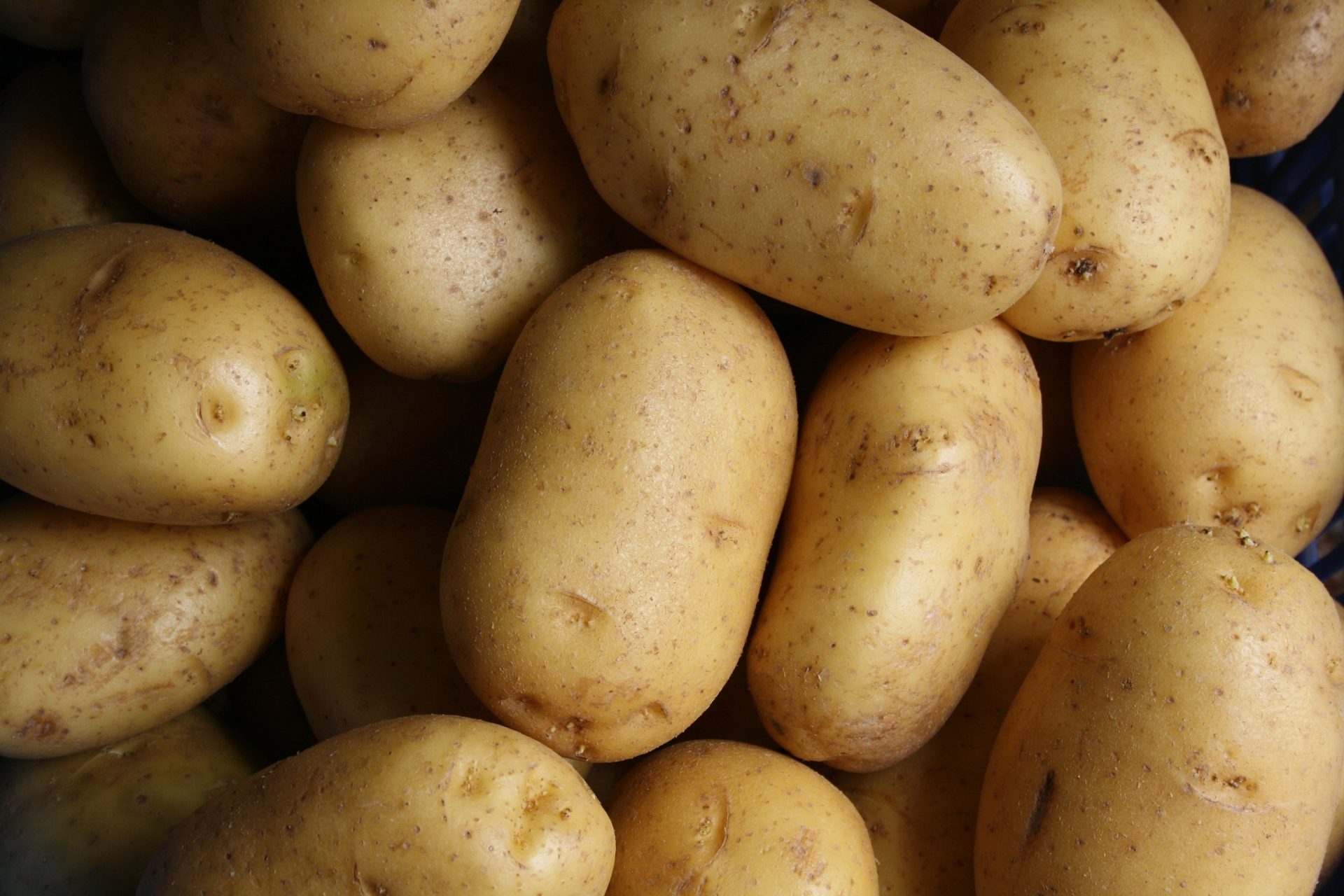
Potassium lets your nerves send signals and your muscles contract, including your heart. Most people think of bananas, but a baked potato with its skin has about three times as much, and most people who eat a varied diet get enough. Here is how much you need, which foods give the most, why boiling matters, and when a supplement is a bad idea.
What does potassium do?
Potassium is a mineral and an electrolyte. The NHS describes it as a mineral that “helps control the balance of fluids in the body, and also helps the heart muscle work properly”. Almost all of the potassium in your body sits inside your cells, while sodium sits outside. Cells constantly pump sodium out and potassium in, and that difference is what lets nerves fire and muscles contract.
Potassium and calcium are different minerals. Potassium controls fluid balance and the signals in nerves and muscles. Calcium builds bones and teeth. If you want to know how potassium works with sodium when you sweat, see our homemade electrolyte drink guide.
How much potassium do you need?
Adults aged 19 to 64 need 3,500 mg of potassium a day, according to the NHS. The NHS adds that you should be able to get all the potassium you need from your daily diet. The European Food Safety Authority (EFSA) uses the same figure.
In healthy people, the kidneys remove the potassium the body doesn’t need. Supplements are a different matter. The NHS says that 3,700 mg or less of potassium supplements a day is unlikely to have obvious harmful effects, that too much can cause stomach pain, nausea and diarrhoea, and that older people should not take potassium supplements unless a doctor advises it, because their kidneys may be less able to remove potassium from the blood.
Potassium rich foods
Potassium is found in almost all foods that haven’t been heavily processed. The figures below are from the UK’s official food composition data, McCance and Widdowson’s CoFID. The portions are our examples.
| Food | Potassium per 100 g | Per portion |
|---|---|---|
| Tomato purée | 1,257 mg | 190 mg in a tablespoon (15 g) |
| Pistachios, roasted and salted | 1,040 mg | 310 mg in a handful (30 g) |
| Dried apricots, ready-to-eat | 1,039 mg | 310 mg in a handful (30 g) |
| Raisins | 889 mg | 270 mg in a handful (30 g) |
| Almonds | 733 mg | 220 mg in a handful (30 g) |
| Potato, baked, flesh and skin | 600 mg | 1,080 mg in a medium potato (180 g) |
| Avocado, Hass | 583 mg | 440 mg in half an avocado (75 g) |
| Sweet potato, baked | 480 mg | 720 mg in 150 g |
| Chicken breast, grilled, no skin | 460 mg | 550 mg in 120 g |
| Salmon, farmed, grilled | 412 mg | 515 mg in a fillet (125 g) |
| Brussels sprouts, boiled | 404 mg | 320 mg in 80 g |
| Red kidney beans, canned, drained | 366 mg | 290 mg in 80 g |
| Bananas | 330 mg | 330 mg in a medium banana (100 g flesh) |
| Semi-skimmed milk | 156 mg | 310 mg in a 200 ml glass |
A dinner of a grilled salmon fillet, a baked potato with the skin and 80 g of Brussels sprouts gives about 1,900 mg, more than half of what you need in a day. Bananas are a good source, but not the best. The NHS also lists broccoli, parsnips, beans and pulses, nuts and seeds, fish, beef, chicken and turkey as good sources.
Boiling washes potassium out
Potassium dissolves in water, so boiling pulls some of it out of food. The CoFID figures show it clearly:
| Food | Raw or baked | Boiled |
|---|---|---|
| Spinach | 500 mg (raw) | 230 mg |
| Potato | 600 mg (baked, with skin) | 365 mg (boiled, flesh only) |
| Parsnip | 450 mg (raw) | 319 mg |
| Butternut squash | 350 mg (raw) | 147 mg |
If you want more potassium, bake, roast or steam your vegetables, eat potatoes with the skin, and use the cooking water in soups and sauces. If you have kidney disease and have been told to eat less potassium, boiling is useful for the same reason. Your renal team will tell you what applies to you.
Potassium supplements: do you need them?
If you eat potatoes, vegetables, fruit, beans and dairy, you usually don’t need a potassium supplement. A supplement can make sense if you eat little of these, for example on a strict low-carb diet that cuts out potatoes and fruit.
Supplements are not for everyone. The NHS lists potassium supplements and salt substitutes that contain potassium among the products that may not mix well with losartan, a common blood pressure medicine. If you take blood pressure medicine or have reduced kidney function, talk to your GP before you start. If a blood test has shown low potassium, your doctor decides the treatment, and the doses are often higher than in over-the-counter supplements.
Potassium and blood pressure
More potassium lowers blood pressure in people who have high blood pressure. In a review of 22 trials prepared for the World Health Organization, systolic blood pressure fell by 3.5 mmHg on average when people got more potassium. The effect was clear in people with high blood pressure, but not in people with normal blood pressure. In the population studies, those with the highest potassium intake had a 24% lower risk of stroke (Aburto et al., 2013).
The largest trial was about salt. In 600 villages in China, almost 21,000 people who had had a stroke, or were over 60 and had high blood pressure, used either regular salt or a salt substitute with 25% potassium chloride. After almost five years, the salt substitute group had 14% fewer strokes and 12% fewer deaths, and serious cases of high potassium did not increase (Neal et al., 2021).
Swapping regular salt for a potassium-based salt substitute can therefore be a good move for many people with high blood pressure. Check with your GP first if you have kidney disease or take a medicine that raises potassium, such as losartan.
Low potassium (hypokalaemia)
Low potassium is rarely caused by too little potassium in food. NHS guidance for healthcare professionals lists losing potassium through diarrhoea, low magnesium and medicines such as loop and thiazide diuretics among the causes (Specialist Pharmacy Service).
Hypokalaemia means a blood potassium below 3.5 mmol/L:
| Blood potassium | Severity | Typical signs |
|---|---|---|
| 3.0–3.5 mmol/L | Mild | No symptoms |
| 2.5–2.9 mmol/L | Moderate | Weakness, tiredness, constipation, irregular heartbeat |
| Below 2.5 mmol/L | Severe | Muscle damage and irregular heartbeat |
Because low magnesium is one of the causes, doctors often check both. You can read more about the different forms of magnesium in our guide to magnesium glycinate vs citrate.
High potassium (hyperkalaemia)
High potassium is more likely when the kidneys can’t remove potassium well, which the NHS notes is more common in older people. Some medicines add to the risk, especially combined with potassium supplements or potassium salt substitutes, as the NHS warns for losartan.
If a blood test shows high potassium, your GP will often repeat it, because a result can be falsely high if the sample was taken or handled badly. NHS laboratory guidance asks doctors to rule out this “pseudo-hyperkalaemia” before acting on the result.
The blood test: normal potassium levels
Potassium is measured in an ordinary blood test. NHS laboratories commonly give a normal range of about 3.5 to 5.3 mmol/L, but each lab prints its own reference range on the result. If your result is outside the range, your doctor will look at why and what needs doing. Don’t take potassium supplements on your own to fix a low result.
Sources
- NHS: Vitamins and minerals, others (potassium)
- Public Health England: McCance and Widdowson’s Composition of Foods Integrated Dataset (CoFID), 2021
- NHS Specialist Pharmacy Service: Treating acute hypokalaemia in adults (2024)
- North Bristol NHS Trust, Department of Clinical Biochemistry: Hyperkalaemia in primary care
- NHS: Common questions about losartan
- EFSA (2016): Dietary reference values for potassium, EFSA Journal
- Aburto et al. (2013): Effect of increased potassium intake on cardiovascular risk factors and disease: systematic review and meta-analyses, BMJ
- Neal et al. (2021): Effect of Salt Substitution on Cardiovascular Events and Death, New England Journal of Medicine
Frequently asked questions
Which foods are highest in potassium?
Per 100 g, tomato purée, roasted pistachios, dried apricots, raisins, almonds and dried dates are among the richest. Per portion, a baked potato with its skin is hard to beat: a 180 g potato gives about 1,080 mg, almost a third of what an adult needs in a day.
How much potassium do I need a day?
The NHS says adults aged 19 to 64 need 3,500 mg of potassium a day, and that you should be able to get all of it from your diet. The European Food Safety Authority uses the same figure.
Are bananas the best source of potassium?
No. A banana is a good source, with about 330 mg per 100 g of flesh, but a baked potato with the skin has 600 mg per 100 g, and dried apricots, nuts and tomato purée have even more per 100 g.
What are the symptoms of low potassium?
Mildly low potassium (3.0 to 3.5 mmol/L) usually causes no symptoms. Lower levels can cause weakness, tiredness, constipation and an irregular heartbeat. Low potassium is usually caused by medicines such as some diuretics, or by losing fluid through diarrhoea, not by diet.