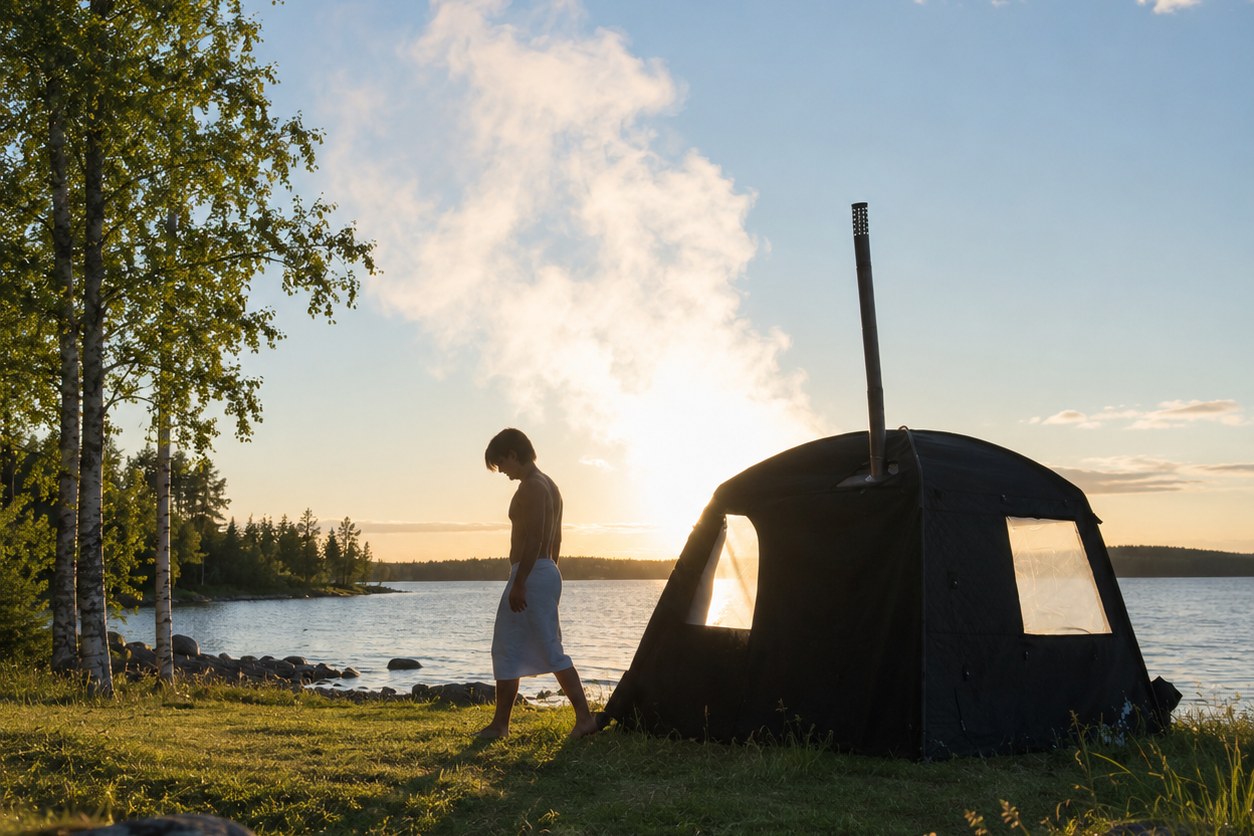
A sauna tent gives you a real wood-fired sauna that packs into a bag. You put it up in the garden, at the cabin, by a lake or in the mountains, light the stove, and 15–20 minutes later you have proper sauna heat and steam. For many people it’s the easiest way to get a sauna habit without building one.
What is a sauna tent?
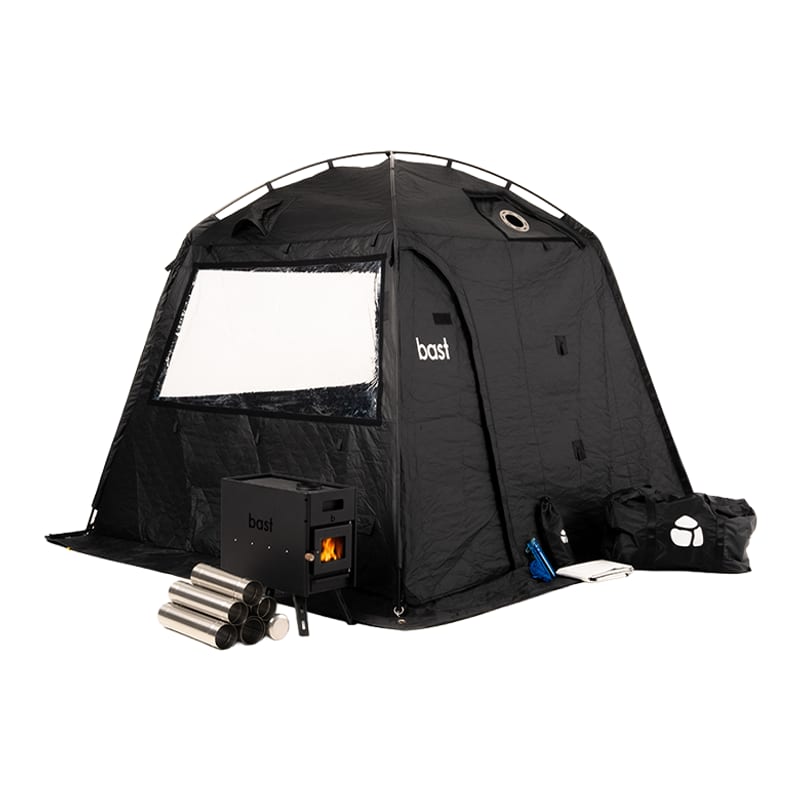
A sauna tent has two parts: an insulated tent made of a heavy, heat-resistant fabric, and a small wood-burning stove with a chimney pipe. Stones sit on top of the stove, so you can throw water on them for steam, just like in a traditional Finnish sauna.
Everything packs down. Small tents weigh around 10 kg without the stove and fit in the boot of a car. The biggest ones seat a whole group.
How hot does it get?
Hotter than most people expect. With dry wood, a sauna tent typically reaches around 80 °C (176 °F) in 15–20 minutes, and larger tents with bigger stoves go above 100 °C (212 °F). That’s the same range as a traditional sauna.
How fast it heats up depends on the weather. Wind and frost make it slower, so give it a few extra minutes in winter. Winter is also when many people enjoy it most: a hot round in the tent, then a roll in the snow or a dip in a lake.
Sauna tent vs. other saunas
| Sauna tent | Traditional sauna | Infrared sauna | Sauna blanket | |
|---|---|---|---|---|
| Heat | 80–100 °C, wood fire | 80–100 °C | 40–60 °C | Up to about 80 °C on the blanket |
| Steam | Yes | Yes | No | No |
| Portable | Yes | No | No | Yes |
| Power | None | Usually electric or wood | Electric | Electric |
| Setup | About 10 minutes | Built in | Built in | A few minutes |
A traditional sauna holds heat better and is ready whenever you are. An infrared sauna or sauna blanket is easier indoors, but you don’t get the steam or the wood-fired feel. A sauna tent sits in between: real heat and steam, without building anything.
Why use a sauna at all?
The best data comes from Finland. In a study that followed 2,315 middle-aged men for about 20 years, those who used a sauna 4–7 times a week had a lower risk of dying from heart disease than those who went once a week (Laukkanen et al., 2015). It’s an observational study, so it shows a link, not proof that the sauna alone caused it. But it fits with what many people notice: better sleep, relaxed muscles and a calmer head after a sauna session.
Wood-fired and portable
Sauna tents from Bast
Sauna tents with a stainless steel wood stove, from Löv for 2–4 people to Björk for 4–10. Free shipping in Europe and a 100-day satisfaction guarantee.
See the sauna tents at Bast →Ad. We may earn a commission if you buy, at no extra cost to you.
Safety: what to think about
- Check fire rules. Many places ban open fires in dry periods. A stove with a chimney can still throw sparks, so check local rules before you light it outdoors.
- Use a fireproof base. Put the stove on stone, gravel or a fire mat, and keep it away from dry grass.
- Ventilate. Fit the chimney properly and keep the vents open. Never sleep in the tent while the stove is burning.
- Drink water and take breaks. You sweat a lot. Start with short rounds of 10–15 minutes.
- Put the fire out. Let the embers burn out completely, or put them out with water, before you leave.
If you are pregnant or have heart disease or low blood pressure, talk to a doctor before you start using a sauna.
How to choose a sauna tent
- Size: How many people will use it at once? A 2–4 person tent heats faster and is easier to carry.
- Stove: A bigger stove heats faster and holds the heat better in cold weather.
- Weight and pack size: Matters if you’ll carry it to the lake or take it on trips.
- Material: The fabric should be made for sauna heat, with a heat-resistant chimney opening.
Bottom line
A sauna tent is the quickest way to a real wood-fired sauna. It’s warm enough, it gives proper steam, and it goes wherever you go. Start with short rounds, respect the fire, and pair it with something cold afterwards.
Sources
Frequently asked questions
How hot does a sauna tent get?
With dry wood, a sauna tent typically reaches around 80 °C (176 °F) in 15–20 minutes. Larger tents with bigger stoves can go above 100 °C (212 °F). Wind and cold outside make it take longer.
Do you need a permit for a sauna tent?
Usually not, because a tent is portable and not a building. Fire rules are the bigger issue: check local fire bans before lighting the stove outdoors, especially in dry summer months.
Can you use a sauna tent in winter?
Yes, and many people think it's at its best then. The stove keeps the tent hot, and you can cool off in snow, a lake or a cold plunge between rounds.
Is a sauna tent safe?
It is safe when you follow the basics: a fireproof base for the stove, a properly fitted chimney, ventilation, and never sleeping in the tent while the stove is burning. Drink water and take breaks.