Sleep
Do blue light glasses work? What the research says
By Kim Ingwersen · 6 October 2026
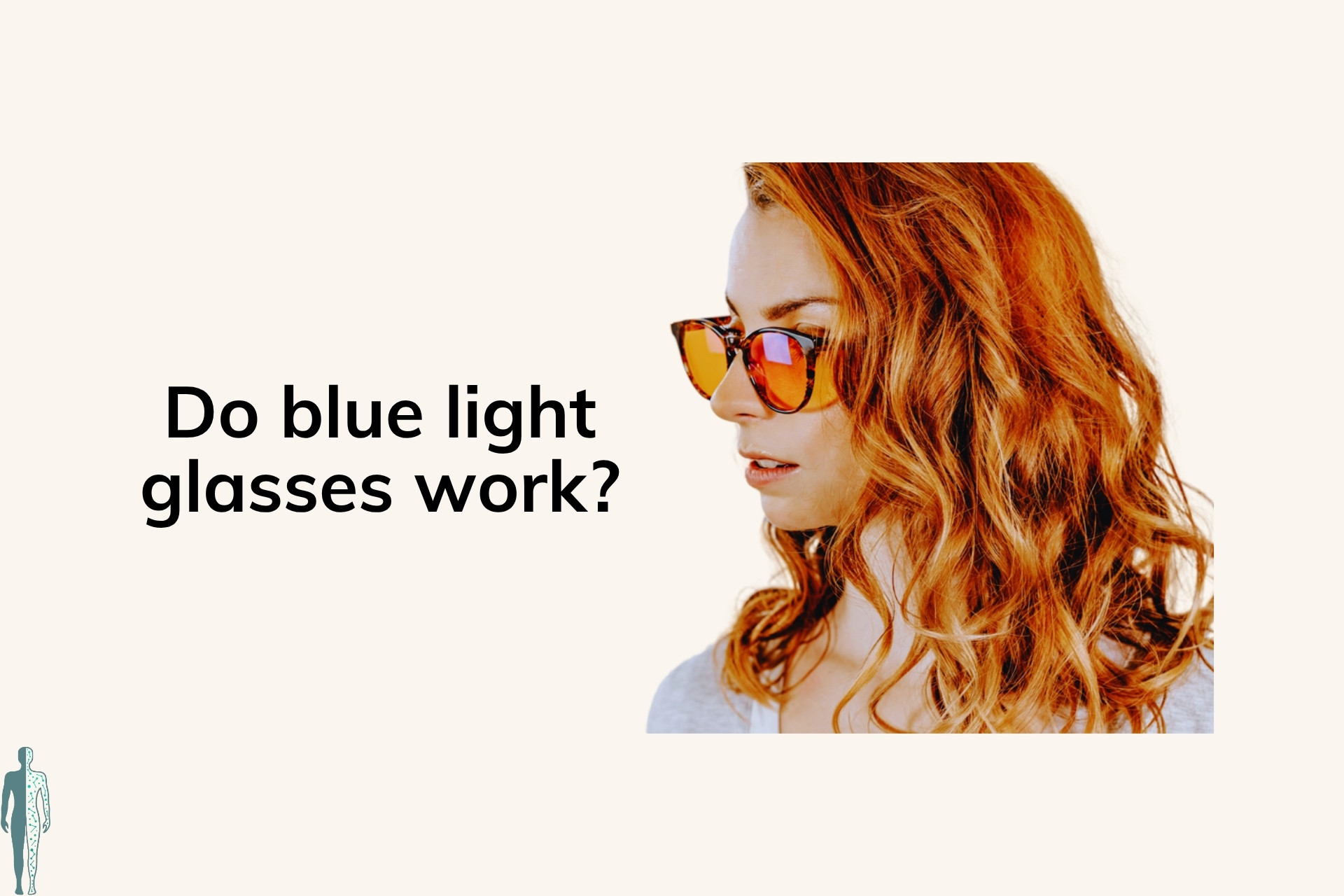
Blue light glasses are sold for two very different jobs: protecting your eyes from screens, and helping you sleep. The research gives a clear answer for the first, and a more hopeful one for the second. Which glasses you buy, and when you wear them, decides whether they do anything at all.
Why evening light affects sleep
Your body makes melatonin when it gets dark. Melatonin is the signal that it is night and time to sleep. Light in the evening, especially blue light, delays that signal.
Normal room light is enough. In a study of 116 healthy young adults, ordinary room light in the hours before bed delayed the start of melatonin in 99 % of participants and shortened the melatonin period by about 90 minutes, compared with dim light (Gooley et al., 2011). Screens add to this, because they sit close to your eyes and are rich in blue light.
Do they help with eye strain? No
The clear glasses sold for computer work filter only a small part of blue light. A Cochrane review of 17 randomised trials found that they probably make little or no difference to eye strain, and no difference to how sharply you see (Singh et al., 2023). Tired eyes after a day at the screen come mostly from long sessions, few breaks and less blinking, not from the colour of the light.
Do they help with sleep? Amber glasses can
Amber and red glasses are a different product. They block most blue light, and they are worn in the evening, not at the desk.
- People with insomnia: In a randomised crossover trial, 14 people with insomnia wore amber or clear glasses for the last two hours before bed for a week. With amber glasses they slept longer, rated their sleep as better and scored better on insomnia questionnaires (Shechter et al., 2018).
- Healthy adults: In an earlier trial, 20 adults who wore amber glasses for three hours before bed reported better sleep quality than those with yellow-tinted glasses that let more blue light through (Burkhart and Phelps, 2009).
- The bigger picture: The Cochrane review found mixed results for sleep. Three of six trials showed better sleep, three showed no difference. The trials were small and the people in them very different.
In short: if you sleep well already, glasses will probably change little. If you struggle to fall asleep and spend your evenings with screens and bright lamps, amber glasses are a cheap, low-risk thing to try.
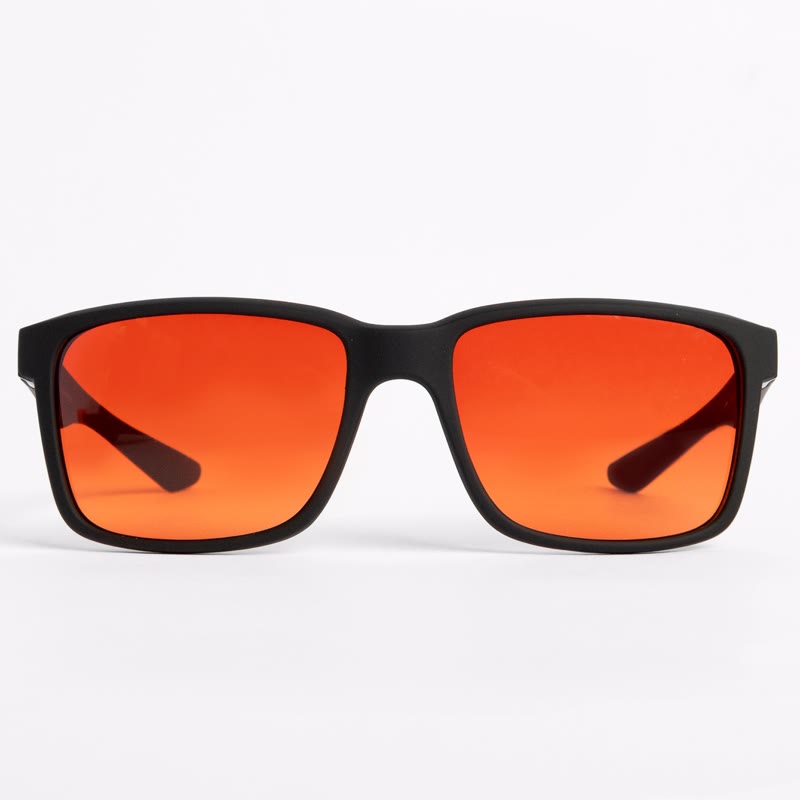
Amber lenses for the evening
TrueDark Sunsets
Evening glasses from Dave Asprey's TrueDark. The amber lenses block 99 % of blue and violet light, and they come in several frames.
See the glasses at TrueDark →Ad. We may earn a commission if you buy, at no extra cost to you.
Which lens colour, and when?
| Lens | Blocks | Use it |
|---|---|---|
| Clear | A small part of blue light | Little reason to buy for sleep |
| Yellow | Some blue light | Daytime screen work, if you like the look |
| Amber | Most blue light | The last 2–3 hours before bed |
| Red | Blue and most green light | The last hour before sleep, or if you get up at night |
Put them on when the sun has set and you still have lamps or screens on. Take them off in the morning: during the day, bright light helps you stay alert and sleep better the next night.
Cheaper ways to get the same effect
Glasses work because they cut the light that reaches your eyes. You can get part of the way without them:
- Dim the lights in the evening and use warm, low lamps instead of ceiling lights.
- Turn on night mode on your phone and laptop, and lower the brightness.
- Put the phone away for the last 30–60 minutes before bed.
- Get bright daylight in the morning. A strong signal in the morning makes the evening signal clearer.
Bottom line
Skip clear blue light glasses for eye strain. They don’t help. For sleep, amber or red glasses in the last hours before bed are worth testing, especially if you have trouble falling asleep. Try them for a week or two, together with dimmer lights in the evening, and see if you fall asleep faster.
Sources
- Singh et al. (2023): Blue-light filtering spectacle lenses for visual performance, sleep, and macular health in adults, Cochrane Database of Systematic Reviews
- Shechter et al. (2018): Blocking nocturnal blue light for insomnia: a randomized controlled trial, Journal of Psychiatric Research
- Burkhart and Phelps (2009): Amber lenses to block blue light and improve sleep: a randomized trial, Chronobiology International
- Gooley et al. (2011): Exposure to room light before bedtime suppresses melatonin onset and shortens melatonin duration in humans, Journal of Clinical Endocrinology & Metabolism
Frequently asked questions
Do blue light glasses help you sleep?
Amber or red glasses worn for the last two hours before bed can help, especially if you have trouble sleeping. In a randomised trial, people with insomnia slept longer with amber glasses than with clear ones. The overall evidence is mixed, so test them for a week or two.
Do blue light glasses help with eye strain?
No. A Cochrane review of 17 trials found that blue light filtering glasses probably make little or no difference to eye strain from screens. Breaks, blinking and good lighting matter more.
When should I wear blue light glasses?
For sleep, wear amber or red glasses for the last 2–3 hours before bed, whenever you have lamps or screens on. During the day you want plenty of light, so take them off.
What is the difference between clear, amber and red lenses?
Clear lenses filter only a small part of blue light. Amber lenses block most blue light and are made for the evening. Red lenses block blue and most green light and are made for the last hour before sleep.