Light
Red light therapy at home: does it work?
By Kim Ingwersen · Published 13 October 2026
Red light therapy has moved from clinics to living rooms. Panels, face masks and caps promise better skin, faster recovery and thicker hair. Some of those claims have reasonable evidence behind them. Others don’t. Here is what the studies show, and how to use a device at home if you want to try.
What is red light therapy?
Red light therapy, also called photobiomodulation or low-level light therapy, shines red light (about 630–670 nm) and near-infrared light (about 810–850 nm) on the skin. The light doesn’t burn or tan. The main theory is that it is absorbed by the mitochondria in your cells and nudges them to produce more energy, which may speed up repair and calm inflammation.
Red light reaches the outer layers of the skin. Near-infrared light goes a little deeper, which is why it is used for joints and muscles.
What the research shows
Skin: fine lines and texture
In a controlled trial with 136 volunteers, red light twice a week for 30 sessions improved skin complexion and roughness, and ultrasound showed denser collagen. Blinded evaluators rated the photos of the treated groups as better than the controls (Wunsch and Matuschka, 2014). This is one of the best-supported uses.
Joint pain: knee osteoarthritis
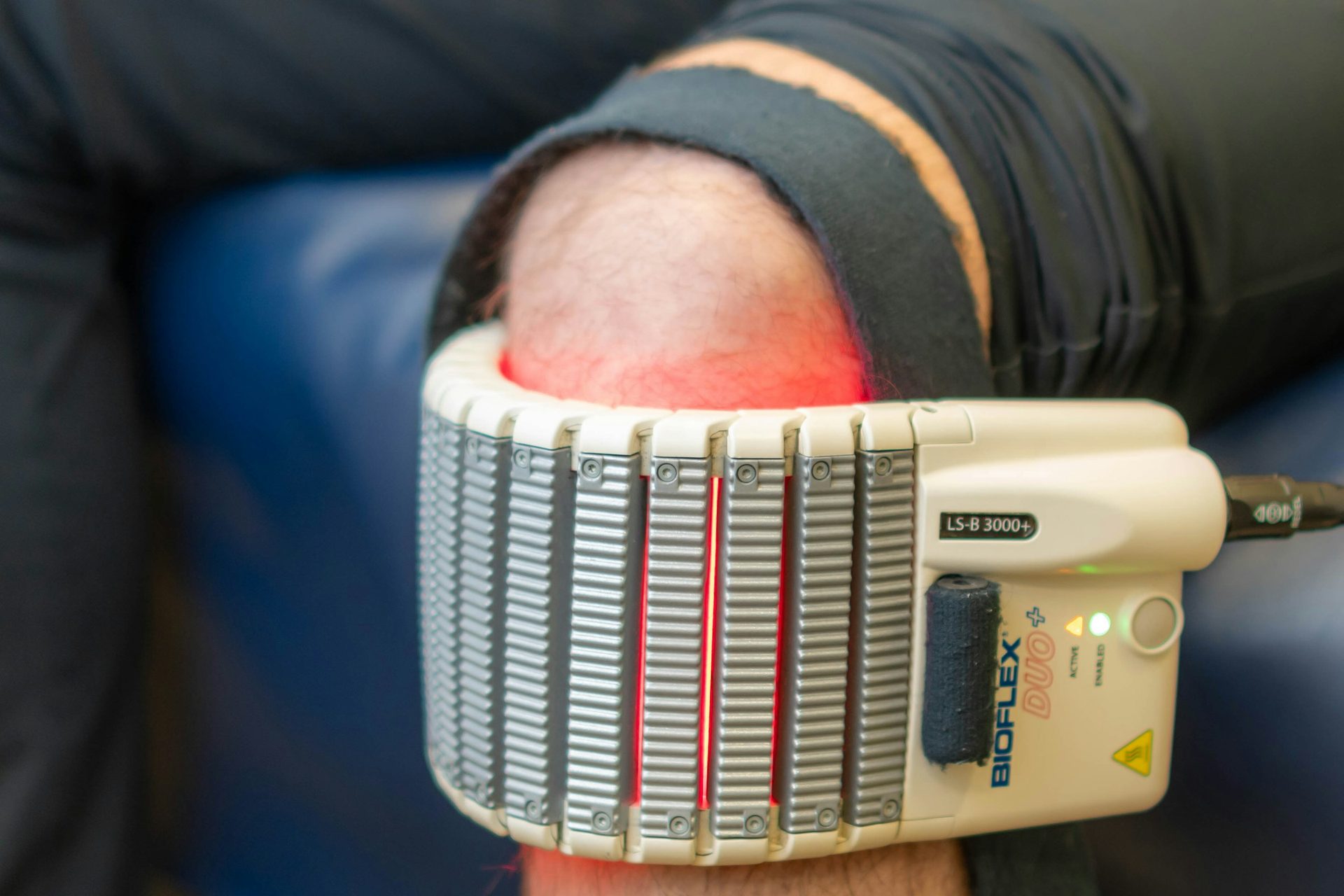
A meta-analysis of 22 placebo-controlled trials with 1,063 people found that low-level laser therapy reduced knee pain by about 14 points on a 100-point scale compared with placebo, and the effect lasted for weeks after treatment (Stausholm et al., 2019). Most of these trials used clinic lasers, not home panels, and treatment guidelines don’t yet recommend it.
Hair: pattern hair loss
Several sham-controlled trials show more hair with laser caps and combs in androgenetic alopecia, and some home devices are cleared by the US Food and Drug Administration (FDA) for this. A review concluded that it appears to be a safe alternative treatment, but that the best dose and wavelength are still unclear (Darwin et al., 2018).
What it doesn’t do
There is no good evidence that red light therapy burns fat, detoxifies, fixes sleep or boosts testosterone. Most of those claims come from small studies, animal research or marketing. If a device promises all of it, be sceptical.
Home devices: what to look for
- Wavelengths. Look for red around 630–670 nm and near-infrared around 810–850 nm. Those are the ranges used in most studies.
- Measured power at a stated distance. Good brands state the irradiance (mW/cm²) at the distance you are meant to use. Light weakens quickly as you move away.
- The right shape for the job. Masks for the face, caps for the scalp, panels for larger areas like knees and back.
- FDA clearance, read correctly. Clearance means the FDA found a device safe and similar to devices already on the market. It doesn’t prove that it works as well as the advertising says.
How to use it
- Keep it regular. Most studies used 10–20 minutes, 3–5 times a week, for 8–12 weeks.
- Follow the distance. Use the distance the manufacturer gives. Closer is not automatically better.
- Clean, bare skin. Light needs to reach the skin. Remove make-up and sunscreen first.
- Protect your eyes. Wear the goggles that come with the device. Near-infrared light is invisible, so you don’t notice how much reaches your eyes.
- Be patient. Skin and hair changes take weeks. Take photos in the same light before you start, so you can compare.
Who should be careful?
Talk to a doctor before you start if you take medicines that make you sensitive to light, have eye disease, are pregnant, or have a mole or skin spot that is changing. Don’t use red light on a suspicious lesion.
Red light vs infrared sauna
They are often mixed up. A red light device delivers specific wavelengths to the skin without much heat. An infrared sauna mainly heats your body and makes you sweat. Both can be part of a routine, but they do different things.
Bottom line
Red light therapy at home is worth trying for fine lines, knee pain or thinning hair, if you are willing to use it several times a week for a few months. Choose a device with stated wavelengths and power, protect your eyes, and ignore claims about fat loss and detox.
Sources
- Wunsch and Matuschka (2014): A controlled trial to determine the efficacy of red and near-infrared light treatment in patient satisfaction, reduction of fine lines, wrinkles, skin roughness, and intradermal collagen density increase, Photomedicine and Laser Surgery
- Stausholm et al. (2019): Efficacy of low-level laser therapy on pain and disability in knee osteoarthritis: systematic review and meta-analysis of randomised placebo-controlled trials, BMJ Open
- Darwin et al. (2018): Low-level laser therapy for the treatment of androgenic alopecia: a review, Lasers in Medical Science
Frequently asked questions
Does red light therapy at home actually work?
For some uses, yes. Controlled trials show improvements in fine lines and skin roughness, less knee pain in osteoarthritis and more hair in pattern hair loss. The effects are moderate and need regular use for 8–12 weeks.
How often should I use red light therapy?
Most studies used 3–5 sessions a week of 10–20 minutes. More is not better: the effect seems to drop at very high doses. Follow the distance and time the manufacturer gives for your device.
Is red light therapy safe?
It is low risk for most people. Protect your eyes, especially from near-infrared light, which you cannot see. Talk to a doctor first if you take medicines that make you sensitive to light, have eye disease or have a skin lesion you are unsure about.
Is red light therapy the same as an infrared sauna?
No. A red light device delivers specific wavelengths of light to the skin without much heat. An infrared sauna is mainly a way to heat your body. They are often confused because both use infrared.