Heat
Infrared sauna benefits: what the research says
By Kim Ingwersen · 6 October 2026
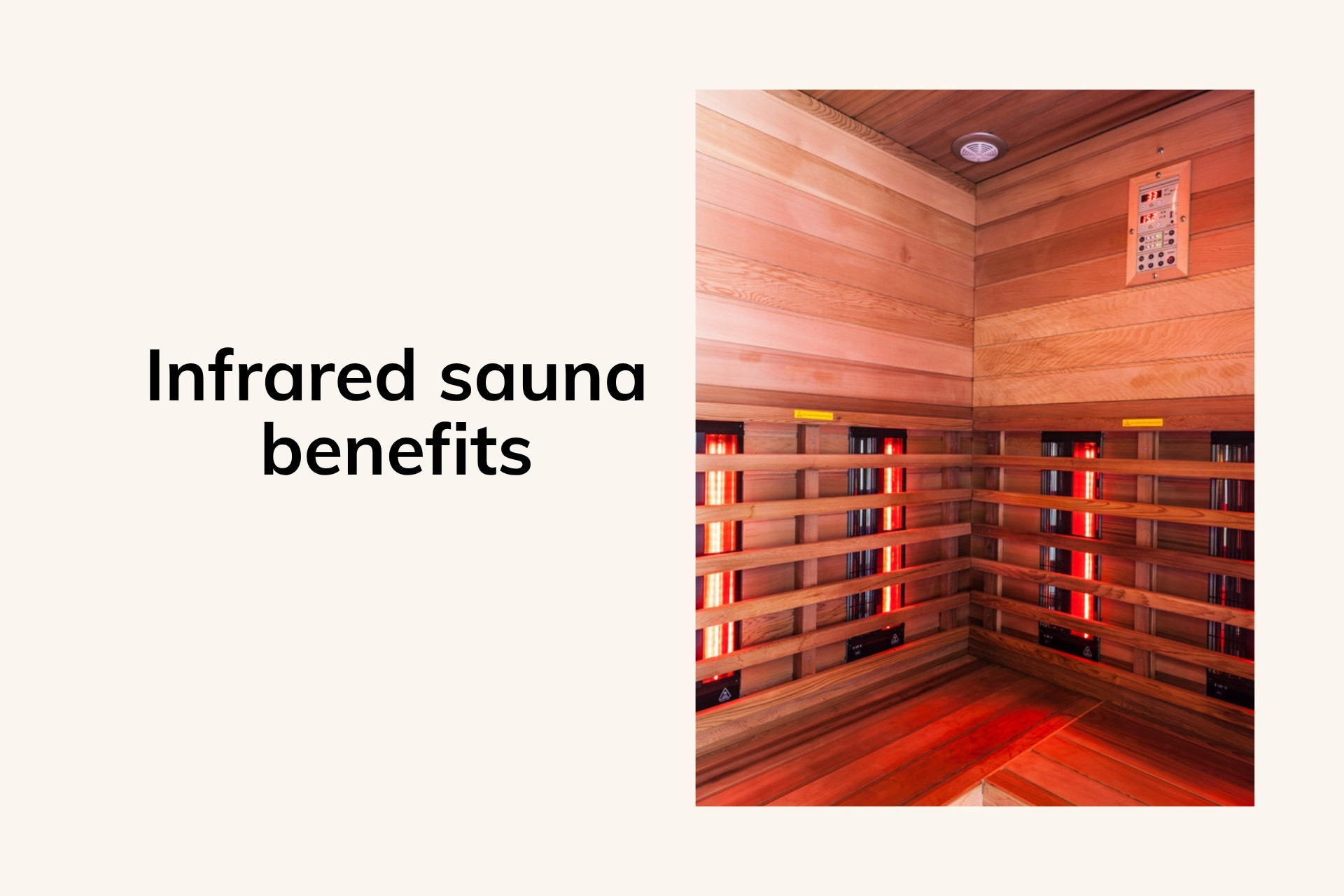
Infrared saunas have become popular in gyms, spas and homes over the last few years. They promise many of the same benefits as a traditional sauna, at a lower and more comfortable temperature. Here is what an infrared sauna does, and what the research actually supports.
How an infrared sauna works
A traditional sauna heats the air, and the hot air heats you. An infrared sauna uses infrared panels that heat your body directly, a bit like sitting in the sun. The air stays at about 40–60 °C (104–140 °F), compared with 80–100 °C (176–212 °F) in a Finnish sauna.
You still sweat a lot, but you can breathe more easily and stay in longer. That makes it a good option for people who find a regular sauna too intense. You don’t get steam, though, and you can’t throw water on stones.
Want to compare? See sauna benefits for the research on traditional saunas, which is much larger.
7 benefits of infrared sauna
1. Relaxation and less stress
The heat relaxes your muscles, and most people feel calm afterwards. Many use an infrared sauna in the evening to wind down: a warm session a couple of hours before bed can make it easier to fall asleep, as your body cools down afterwards. This is based more on experience than on studies, so test what works for you.
2. Better blood vessel function
In a Japanese study, patients with chronic heart failure sat in a 60 °C sauna for 15 minutes every day for two weeks, then rested under blankets for 30 minutes. That’s the same temperature range as an infrared sauna. The function of the inner lining of their blood vessels (the endothelium) improved, and 17 of 20 patients felt better (Kihara et al., 2002).
Studies of infrared light aimed at the arm in kidney dialysis patients also found better blood flow in the vessels used for dialysis (Lin et al., 2007). If you have heart disease, talk to your doctor before you start.
3. Less muscle and joint pain
Many people with stiff muscles and sore joints find that infrared heat helps. The heat increases blood flow and relaxes the muscles. Most of the research is on infrared light aimed at one part of the body: in dialysis patients, it improved blood flow and reduced pain in the arm (Choi et al., 2016). Whether a full infrared sauna session does the same is less studied.
4. Faster recovery after training
In a Finnish study of ten active men, 30 minutes in an infrared sauna after a hard endurance session led to better results in a jump test than sitting without sauna. After strength training, it made no difference. The men described the infrared sauna as light on the body and relaxing (Mero et al., 2015).
5. Sweating out heavy metals
Detox is one of the most hyped claims. Sweat does contain small amounts of heavy metals such as lead, cadmium and mercury. A systematic review concluded that sweating deserves attention as a way to remove them, but that more research is needed (Sears et al., 2012). Your liver and kidneys still do most of the work, so see sweating as a small extra.
6. Skin
In the lab, infrared light increased the production of collagen and elastin in skin cells. In a Korean study, 20 people with wrinkles got infrared treatment of the face every day for six months, and all reported better skin texture and roughness. Pigment spots did not improve (Lee et al., 2006). The study used an infrared lamp, not a sauna, so the effect of a normal session is less certain.
7. Easier to use than a regular sauna
This is not a health effect, but it matters. The lower temperature means many people who can’t stand a regular sauna can use an infrared one, and they fit in a corner of a room and run on a normal power socket. The best sauna is the one you actually use.
Infrared sauna vs. traditional sauna
| Infrared sauna | Traditional sauna | |
|---|---|---|
| Air temperature | 40–60 °C (104–140 °F) | 80–100 °C (176–212 °F) |
| How it heats | Infrared panels heat your body | Hot air and steam |
| Steam | No | Yes |
| Warm-up time | 10–15 minutes | 30–60 minutes (electric) |
| Research | Small studies | Large studies over decades |
If you want the benefits from the big Finnish studies, a traditional sauna or a wood-fired sauna tent is closest to what was studied. If you want something milder for home, an infrared sauna or an infrared sauna blanket is easier.
How to use an infrared sauna
- Start with 10–15 minutes and build up to 20–30.
- Drink water before and after.
- Shower afterwards to rinse off the sweat.
- Use it in the evening if you want help winding down, but not right before bed if it makes you feel awake.
- Skip it if you feel unwell, have a fever or have been drinking alcohol.
Sources
- Kihara T et al. (2002): Repeated sauna treatment improves vascular endothelial and cardiac function in patients with chronic heart failure. Journal of the American College of Cardiology
- Lin CC et al. (2007): Far-infrared therapy: a novel treatment to improve access blood flow and unassisted patency of arteriovenous fistula in hemodialysis patients. Journal of the American Society of Nephrology
- Choi SJ et al. (2016): Clinical utility of far-infrared therapy for improvement of vascular access blood flow and pain control in hemodialysis patients. Kidney Research and Clinical Practice
- Mero A et al. (2015): Effects of far-infrared sauna bathing on recovery from strength and endurance training sessions in men. SpringerPlus
- Sears ME et al. (2012): Arsenic, cadmium, lead, and mercury in sweat: a systematic review. Journal of Environmental and Public Health
- Lee JH et al. (2006): Effects of infrared radiation on skin photo-aging and pigmentation. Yonsei Medical Journal
Frequently asked questions
What is the difference between an infrared sauna and a regular sauna?
A regular sauna heats the air to 80–100 °C (176–212 °F). An infrared sauna heats your body directly with infrared light and stays around 40–60 °C (104–140 °F). You sweat a lot, but the heat feels milder.
How long should you sit in an infrared sauna?
Start with 10–15 minutes and build up to 20–30 minutes as you get used to it. Drink water before and after.
Is an infrared sauna safe?
For healthy adults it is considered safe. If you are pregnant, have heart disease or low blood pressure, talk to a doctor first.
Does an infrared sauna help you lose weight?
Not in any meaningful way. The weight you lose during a session is water, and it comes back when you drink. See it as a complement to exercise and diet, not a replacement.
Is there a cheaper alternative to an infrared sauna cabin?
An infrared sauna blanket gives you infrared heat lying down. It takes less space and costs much less than a cabin.