Saunas have been part of Finnish life for centuries, and that’s where most of the research comes from. The short version: people who use a sauna often tend to have healthier hearts and live longer. Here is what the studies actually show, and how to get started.
Types of sauna
- Traditional (Finnish) sauna: a wood-panelled room heated to 80–100 °C (176–212 °F) by a wood stove or electric heater. You throw water on the stones for steam. Most of the research is on this type.
- Infrared sauna: heats your body directly with infrared light, at a lower 40–60 °C (104–140 °F). Read more in infrared sauna benefits.
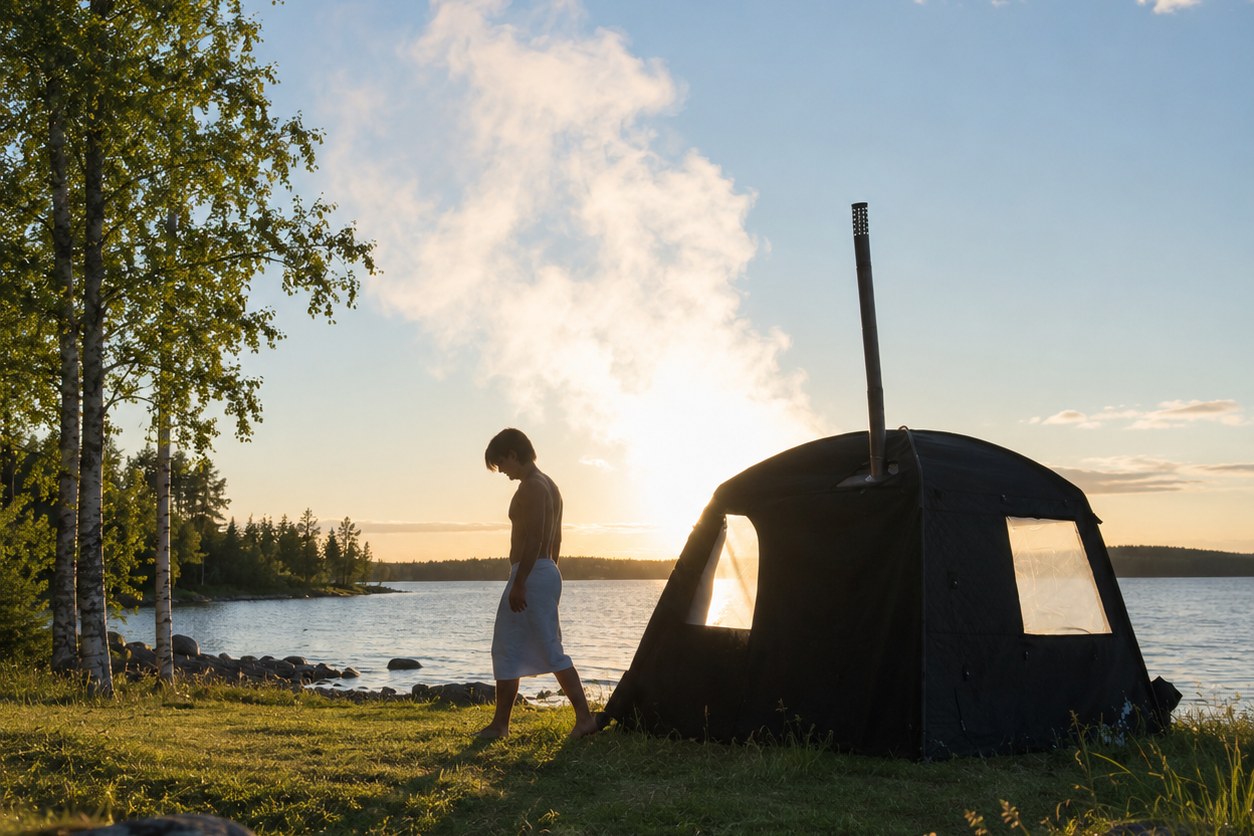
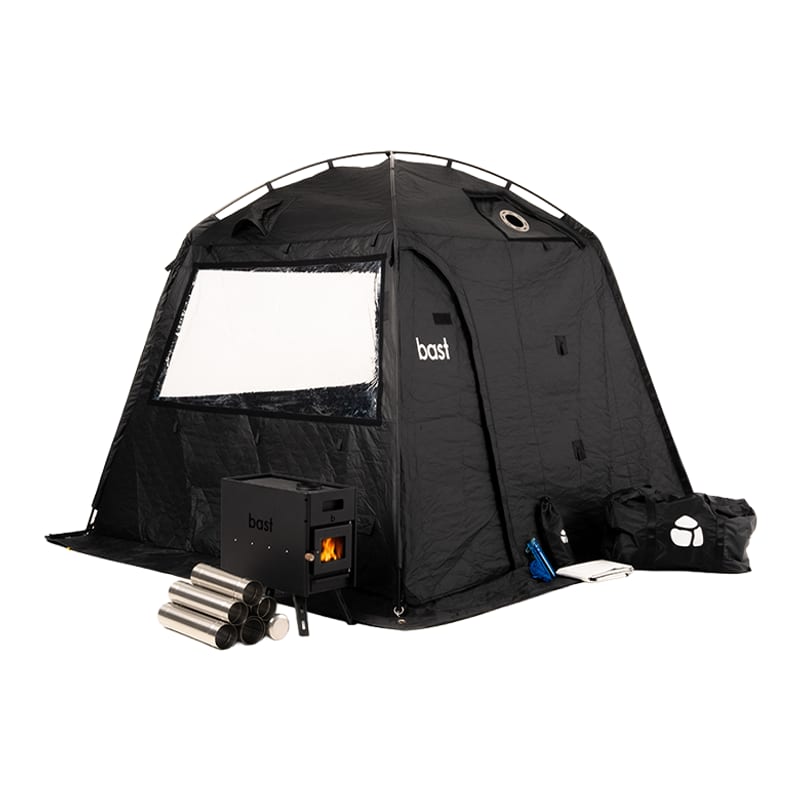
- Sauna tent: a portable, wood-fired sauna that packs into a bag. See how a sauna tent works.
7 benefits of sauna
1. A healthier heart and a longer life
The best-known study followed 2,315 Finnish men for about 20 years. Those who used a sauna 4–7 times a week had a 63% lower risk of sudden cardiac death than those who went once a week. They also had a lower risk of dying from heart disease and from any cause (Laukkanen et al., 2015).
It is an observational study, so it shows a link, not proof that the sauna alone caused it. People who sit in a sauna every day may differ in other ways too. But the researchers adjusted for the usual risk factors, and the results have held up in later studies from the same group.
2. Lower blood pressure
In a sauna, your heart rate goes up and blood pressure rises, much like during a brisk walk. Afterwards, blood pressure drops below where it started (Ketelhut & Ketelhut, 2019).
Over time this seems to add up. In a Finnish cohort of 1,621 men, those who used a sauna 4–7 times a week were about half as likely to develop high blood pressure over 25 years as those who went once a week (Zaccardi et al., 2017).
3. Lower risk of stroke
In a study of Finnish men and women followed for about 15 years, those who used a sauna 4–7 times a week had a 61% lower risk of stroke than those who went once a week (Kunutsor et al., 2018).
4. Better endurance
Heat gives your body a training effect. In a small study, six male runners sat in a sauna for about 30 minutes after training, around 13 times over three weeks. They could then run 32% longer before exhaustion. The researchers think the main reason was a larger blood volume, which carries more oxygen to the muscles (Scoon et al., 2007).
5. Fewer colds
In an older study of 50 people, those who used a sauna regularly had about half as many colds as the control group during the last three months of the study (Ernst et al., 1990). A newer Polish study found that a series of sauna sessions changed immune markers more than a single session did (Pilch et al., 2023). Both studies are small, so see this as promising rather than proven.
6. Less inflammation
Inflammation is linked to heart disease, diabetes and many other chronic diseases. In a Finnish study of 2,269 men, those who used a sauna often had lower levels of the inflammation marker CRP in their blood (Kunutsor et al., 2018).
7. A healthier brain
In the same group of 2,315 Finnish men, those who used a sauna 4–7 times a week had a 66% lower risk of dementia and 65% lower risk of Alzheimer’s disease than those who went once a week (Laukkanen et al., 2017). Again, this shows a link and needs to be confirmed in other groups.
What the research doesn’t show
Most sauna studies are either large observational studies from Finland or small trials with fewer than 40 people. A systematic review of 40 studies concluded that regular dry sauna bathing has potential health benefits, but that more and better studies are needed (Hussain & Cohen, 2018).
Sauna will also not help you lose fat in any meaningful way. The weight you lose in a session is water, and it comes back when you drink.
No sauna nearby?
Sauna tents from Bast
A wood-fired sauna you can put up in about 10 minutes, from Löv for 2–4 people to Björk for 4–10. Free shipping in Europe and a 100-day satisfaction guarantee.
See the sauna tents at Bast →Ad. We may earn a commission if you buy, at no extra cost to you.
Heat and cold together
Many people alternate between the sauna and a cold shower, a lake or a cold plunge. This is often called contrast therapy. There is little research on the combination itself, but both heat and cold have support on their own, and most people feel great afterwards.
How to use a sauna safely
- Start short: 5–10 minutes per round is plenty at first.
- Drink water: you can sweat out half a litre or more in a session.
- Skip the alcohol: alcohol and sauna heat together lower blood pressure and raise the risk of fainting.
- Listen to your body: if you feel dizzy or unwell, get out and cool down.
- Cool down slowly if you’re new: a lukewarm shower first, then colder as you get used to it.
Sources
- Laukkanen T et al. (2015): Association between sauna bathing and fatal cardiovascular and all-cause mortality events. JAMA Internal Medicine
- Ketelhut S, Ketelhut RG (2019): The blood pressure and heart rate during sauna bath correspond to cardiac responses during submaximal dynamic exercise. Complementary Therapies in Medicine
- Zaccardi F et al. (2017): Sauna bathing and incident hypertension: a prospective cohort study. American Journal of Hypertension
- Kunutsor SK et al. (2018): Sauna bathing reduces the risk of stroke in Finnish men and women. Neurology
- Scoon GS et al. (2007): Effect of post-exercise sauna bathing on the endurance performance of competitive male runners. Journal of Science and Medicine in Sport
- Ernst E et al. (1990): Regular sauna bathing and the incidence of common colds. Annals of Medicine
- Pilch W et al. (2023): The effects of a single and a series of Finnish sauna sessions on the immune response and HSP-70 levels. International Journal of Hyperthermia
- Kunutsor SK et al. (2018): Longitudinal associations of sauna bathing with inflammation and oxidative stress: the KIHD prospective cohort study. Annals of Medicine
- Laukkanen T et al. (2017): Sauna bathing is inversely associated with dementia and Alzheimer’s disease in middle-aged Finnish men. Age and Ageing
- Hussain J, Cohen M (2018): Clinical effects of regular dry sauna bathing: a systematic review. Evidence-Based Complementary and Alternative Medicine
Frequently asked questions
How often should you use a sauna?
In the Finnish studies, the biggest benefits were seen at 4–7 sessions a week, but 2–3 sessions were also linked to lower risk than once a week. Start with what fits your week and build from there.
How long should you stay in a sauna?
Start with 5–10 minutes. Many people work up to 15–20 minutes per round. In the Finnish data, sessions of more than 19 minutes were linked to the lowest risk of sudden cardiac death.
Is a sauna good after a workout?
Yes, for most people. In a small study, runners who used a sauna after training for three weeks could run 32% longer before exhaustion. Drink water, because you lose fluid in both.
Who should not use a sauna?
Talk to a doctor first if you are pregnant, have unstable heart disease, very low blood pressure or have recently had a heart attack. Don't drink alcohol before or during a sauna session.