Sleep
Sleep mask benefits: do sleep masks really work?
By Kim Ingwersen · Published 13 October 2026
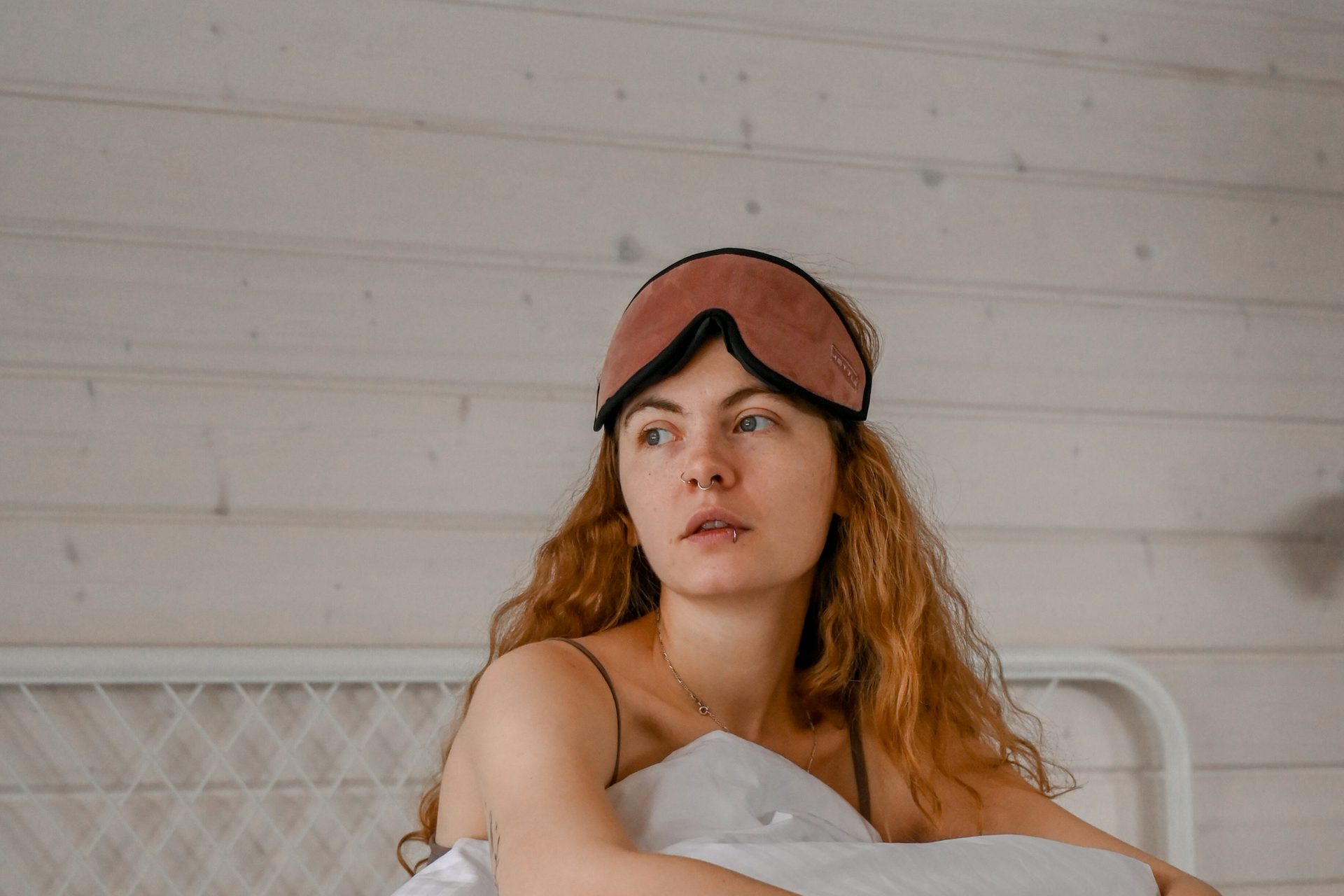
Light at night is easy to underestimate. Street lights, standby lights, a partner reading or early summer mornings can all reach your eyes while you sleep. A sleep mask is the cheapest way to make your bedroom completely dark, wherever you are.
Why darkness matters
Your body uses darkness as a signal that it is night. In the dark, it releases melatonin, the hormone that makes you sleepy and helps time your sleep. Light, even through closed eyelids, can hold melatonin back and make sleep lighter. That is also why blue light glasses in the evening are popular among biohackers.
What the research shows
The best study so far comes from Cardiff University. In the first experiment, 94 young adults slept with a sleep mask every night for a week, and for another week without blocking the light. After the week with a proper mask, they were better at learning new word pairs and had faster reaction times. A second experiment with 35 people repeated the memory result and linked it to time spent in deep, slow-wave sleep (Greco et al., 2023).
The effects were modest, and the participants were young and healthy. Still, it is a cheap change with a measurable benefit the next day.
Types of sleep mask
- Contoured (3D) masks have shaped cups around the eyes. They don’t touch your eyelids, so you can blink and your eyes can move freely in dream sleep. They usually block the most light.
- Flat silk or cotton masks are soft and light, and many people like the feel. They rest on the eyes and often leak light by the nose.
- Weighted masks add gentle pressure, which some people find calming. They are less suited to side sleepers.
- Masks with headphones have flat speakers and Bluetooth, for people who fall asleep to podcasts or white noise.
How to choose a sleep mask
- Total blackout. Check the area around the nose. That is where most masks leak light.
- No pressure on the eyes. Choose a contoured mask if you don’t like anything touching your eyelids.
- A slim profile for side sleeping. Thick masks press against the pillow and slide off.
- A comfortable strap. A wide, adjustable strap without hard buckles stays in place without pulling your hair.
- Washable and breathable. You wear it on your face every night, so it should be easy to clean.
Tips for getting used to one
Most people need a few nights to get used to wearing a mask. Put it on when you turn off the light, not before. If it slips off at night, try a tighter strap or a contoured mask that sits better. Combine it with a cool, quiet bedroom and regular bedtimes, the basics of good sleep.
Bottom line
A sleep mask is a simple, cheap biohack with a real, if modest, benefit. Choose a contoured mask that blocks light around the nose and doesn’t press on your eyes, and give it a week before you judge it.
Sources
Frequently asked questions
Is it good to sleep with a sleep mask every night?
Yes, for most people. A mask that fits well and doesn't press on your eyes is safe to use every night. Wash it regularly, and stop if it irritates your skin or eyes.
Do sleep masks help you sleep deeper?
They may. In a 2023 study, the memory benefit of wearing a mask was linked to time in slow-wave (deep) sleep. The study was small, and it didn't measure deep sleep directly in the main experiment.
What is the best sleep mask for side sleepers?
A slim, contoured mask with a soft, flat strap. Thick masks and masks with buckles press against the pillow and slip off when you lie on your side.
Are contoured sleep masks better than flat ones?
For most people, yes. Contoured masks have cups that leave room for the eyes, so they don't press on your eyelids, and they usually block more light around the nose.