Supplements
Vitamin D deficiency symptoms: signs, causes and what to do
By Kim Ingwersen · Published 13 October 2026

Vitamin D keeps your bones, teeth and muscles healthy. Your skin makes it from sunlight, but in winter, at northern latitudes, the sun is too low for that to work. That is why low vitamin D is common in the darker months. The surprising part is that most people with low levels feel nothing at all.
Symptoms of vitamin D deficiency
When levels are only slightly low, there are usually no symptoms. When they drop a lot, the signs are:
- Tiredness and low energy.
- Bone pain, often in the lower back, hips, legs or ribs.
- Muscle weakness and aches, for example difficulty climbing stairs or getting up from a chair.
- Cramps or twitching in more severe cases.
Long-term, severe deficiency softens the bones. In adults this is called osteomalacia, and in children it causes rickets (NHS).
Low vitamin D is often linked to low mood and frequent infections, but the evidence is mixed. In a large analysis of 25 trials, vitamin D supplements slightly reduced the risk of colds and other respiratory infections (Martineau et al., 2017). The link with mood is less clear.
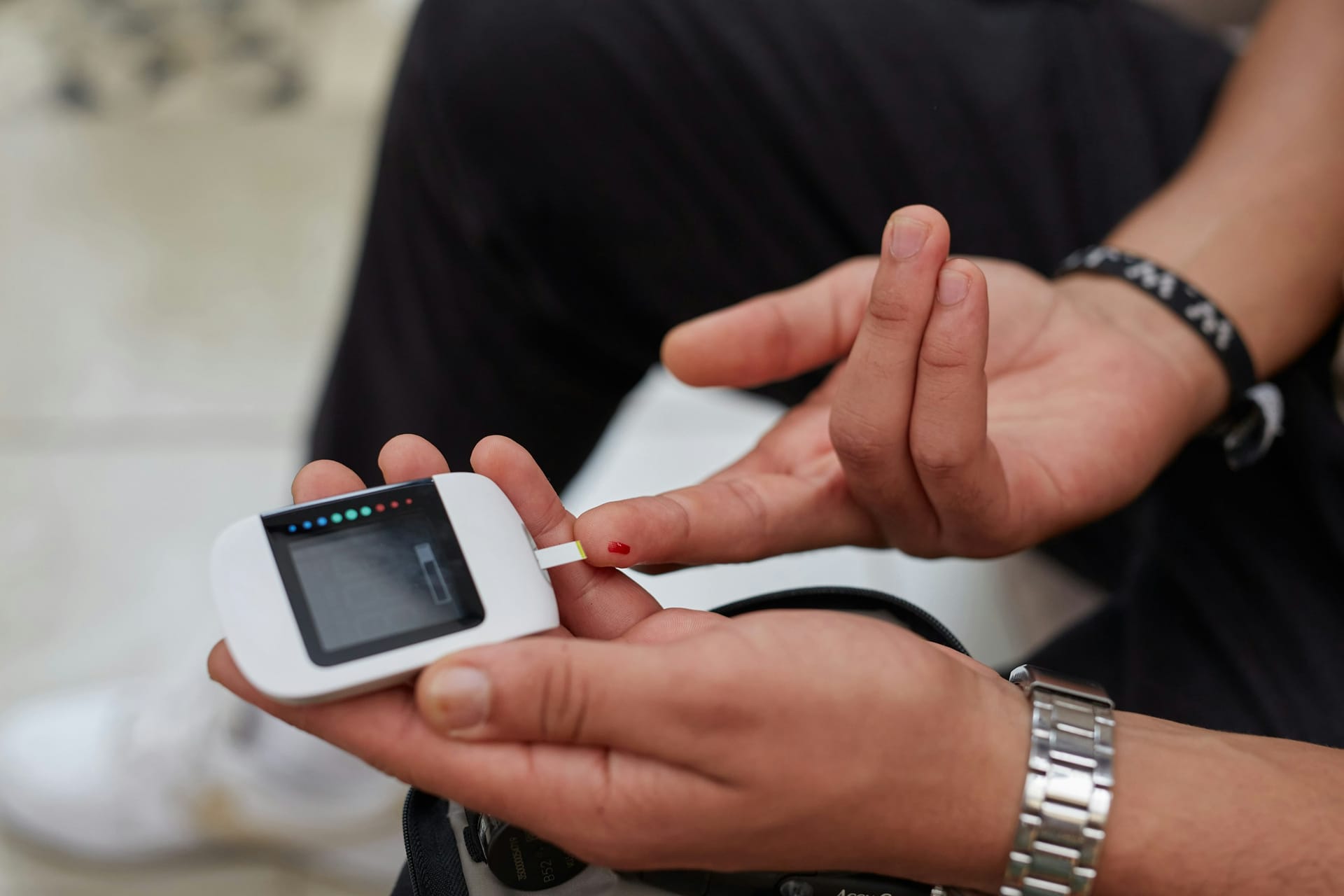
Because these symptoms are so common, the only way to know whether you are low is a blood test for 25-hydroxyvitamin D.
Who is at risk?
- People who get little sun, such as those who work indoors, cover their skin or are housebound.
- People with darker skin, who need more sun to make the same amount of vitamin D.
- Older adults, whose skin makes less vitamin D.
- People living far from the equator, especially from October to March.
- People with obesity, or conditions that affect absorption, such as coeliac disease or Crohn’s disease.
What the blood test numbers mean
Results are given in nmol/L in the UK and Europe and often in ng/mL in the US. According to the US National Institutes of Health, below 30 nmol/L (12 ng/mL) means a risk of deficiency, 50 nmol/L (20 ng/mL) or more is enough for most people, and levels above 125 nmol/L (50 ng/mL) may cause problems (NIH Office of Dietary Supplements).
How much vitamin D to take
- UK: Everyone should consider 10 micrograms (400 IU) a day in autumn and winter. People at higher risk, such as those with darker skin or who are rarely outdoors, should take it all year.
- US: The recommended amount is 15 micrograms (600 IU) a day for adults up to 70, and 20 micrograms (800 IU) from 71.
- Upper limit: Adults should not take more than 100 micrograms (4,000 IU) a day without medical advice. Too much over a long time can raise calcium in the blood and damage the kidneys and heart.
If a blood test shows that you are deficient, a doctor may prescribe a higher dose for a few weeks. Don’t do that on your own.
D3 is the better choice for most people. In a review of trials, it raised blood levels more than D2 (Tripkovic et al., 2012).
Food and sun
Few foods contain much vitamin D. The best are oily fish such as salmon, mackerel and sardines, egg yolks, and foods with added vitamin D, such as some cereals and spreads. From April to the end of September, most people in the UK can get enough from short periods of sun on bare arms and face, without burning.
A light therapy lamp doesn’t help with vitamin D. A SAD lamp filters out UV light, which is what your skin needs to make it. The lamp works on your body clock and mood, not on your vitamin D level.
Bottom line
Low vitamin D is common in winter and usually silent. Take 10 micrograms (400 IU) a day from October to March, or follow your doctor’s advice if you are at higher risk. If you have tiredness, bone pain or weak muscles, ask for a blood test before you take high doses.
Sources
- NHS: Vitamin D
- NIH Office of Dietary Supplements: Vitamin D fact sheet for health professionals
- Martineau et al. (2017): Vitamin D supplementation to prevent acute respiratory tract infections: systematic review and meta-analysis of individual participant data, BMJ
- Tripkovic et al. (2012): Comparison of vitamin D2 and vitamin D3 supplementation in raising serum 25-hydroxyvitamin D status: a systematic review and meta-analysis, American Journal of Clinical Nutrition
Frequently asked questions
What are the first signs of vitamin D deficiency?
Often there are none. When levels drop a lot, the first signs are usually tiredness, aches in the bones (especially the lower back and legs) and weak or aching muscles. These are common symptoms with many causes, so a blood test is the only way to know.
How much vitamin D should I take?
In the UK, 10 micrograms (400 IU) a day in autumn and winter, and all year if you are at higher risk. US guidelines recommend 15 micrograms (600 IU) a day for adults up to 70, and 20 micrograms (800 IU) from 71. Don't take more than 100 micrograms (4,000 IU) a day unless a doctor tells you to.
Can low vitamin D cause tiredness?
Yes, tiredness is one of the symptoms of very low vitamin D. But tiredness has many causes, from poor sleep to low iron, so check with a blood test before assuming it is vitamin D.
Is vitamin D3 better than D2?
Yes, for most people. In a review of trials, D3 raised blood levels more than D2 did. Most supplements sold today contain D3.